Flight tips
Airplane ear pain: why it happens and how to prevent it
By the TSA Wait Times team · Updated · Published June 2026
That pressure and pop in your ears during descent is called ear barotrauma — and it is the most common discomfort of air travel. It happens because cabin pressure changes faster than your Eustachian tube can react, pushing or pulling on your eardrum. Most cases are completely preventable with the right technique or over-the-counter help. Here is everything that works, and when to worry.
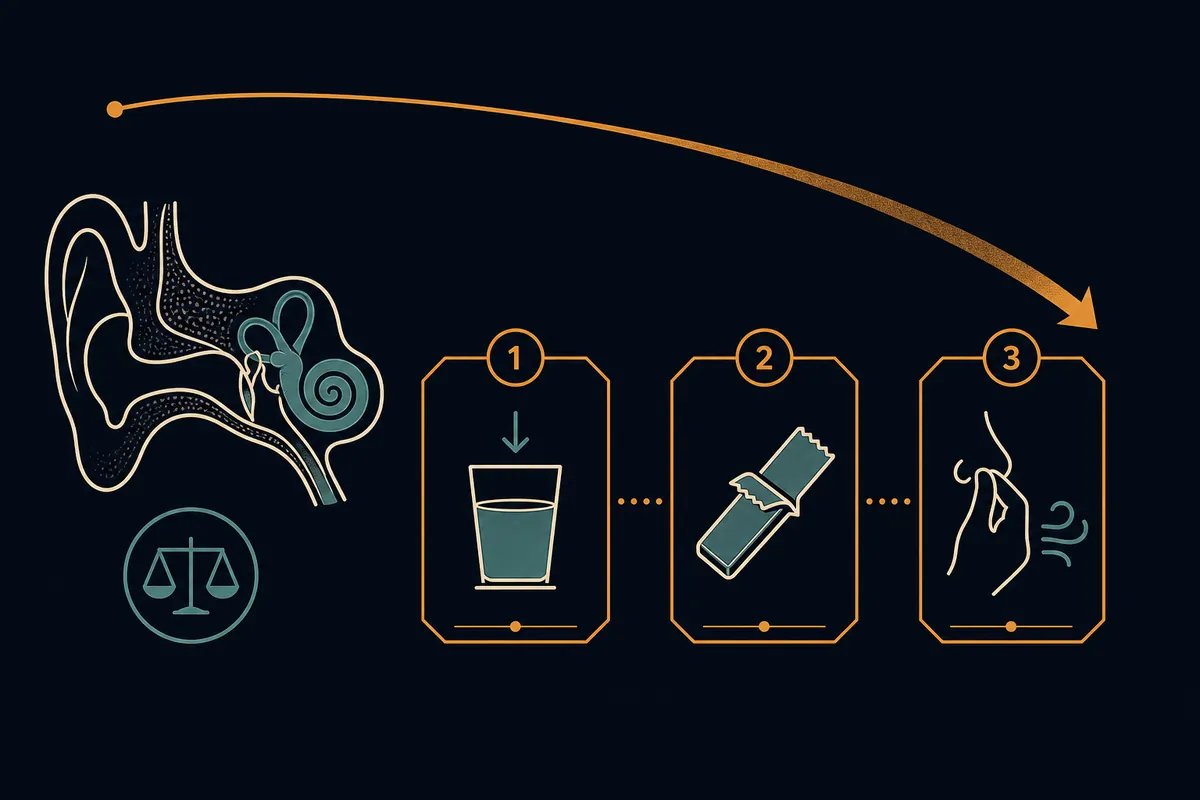
Why do ears hurt on airplanes? The Eustachian tube explained
The Eustachian tube connects your middle ear to the back of your throat and exists solely to keep air pressure equal on both sides of your eardrum. When a plane climbs or descends, cabin pressure shifts faster than the tube can react, and the resulting pressure imbalance pushes or pulls on the eardrum causing pain. If you have a cold, allergies, or sinus congestion, swelling narrows or blocks the tube entirely, making the problem significantly worse. This condition is called ear barotrauma and is the most common form of barotrauma, per Cleveland Clinic.
Symptoms range from mild to severe:
- Feeling of fullness or blockage in the ear
- Muffled or reduced hearing
- Mild to severe ear pain
- Dizziness
- Rarely: fluid or discharge indicating a ruptured eardrum
Why descent hurts more than takeoff
On ascent, cabin pressure drops and air inside the middle ear expands — it passively vents outward through the Eustachian tube with little resistance, so most people barely notice takeoff. On descent, the opposite happens: rising outside pressure compresses the middle ear space and air must be actively forced back in through the tube. If the tube is even slightly swollen or congested, that inward flow is blocked and pain builds quickly. This asymmetry is why almost all airplane ear pain is felt during the final 20–45 minutes of descent rather than at takeoff.
How to prevent airplane ear: all methods compared
The most effective prevention combines behavioral techniques — staying awake during descent so you can actively equalize — with pharmacological support if you have congestion. No single method works for everyone, and the free techniques (swallowing, yawning, and the Valsalva maneuver) should always be your first line of defense because they carry no side-effect risk.
| Method | When to use | Best for / Notes |
|---|---|---|
| Stay awake during descent | Last 30–45 min before landing | Everyone; sleeping prevents active equalization |
| Swallow frequently | Throughout descent | Everyone; stimulates Eustachian tube opening |
| Chew gum or suck candy | Throughout descent | Easy passive reminder to keep swallowing |
| Yawn widely | Throughout descent | Opens tube wider than swallowing alone |
| Valsalva maneuver | At first sign of pressure | Adults; caution with congestion or ear infections |
| Sudafed (pseudoephedrine) | 30–60 min before descent | Cold/allergy sufferers; avoid with high BP |
| Afrin nasal spray (oxymetazoline) | 30–60 min before descent | Cold/allergy sufferers; do not use >3 days |
| EarPlanes filtered ear plugs | Insert before takeoff; keep in until cruising altitude and again for descent | Frequent flyers prone to ear pain; 20 dB noise reduction bonus |
How to do the Valsalva maneuver correctly (and safely)
The Valsalva maneuver is the fastest way to pop your ears on demand: pinch your nostrils shut, close your mouth, and gently blow out as if blowing your nose. The resulting pressure in your throat forces air up into the Eustachian tubes, equalizing the middle ear. The key word is gently — blowing too hard or holding pressure for more than five seconds can rupture the round or oval windows of the inner ear, according to Divers Alert Network. Do not attempt the Valsalva if you have an active ear infection, as forcing air through an infected tube can push bacteria into the middle ear.
- Pinch both nostrils closed
- Close your mouth
- Blow gently — you should feel or hear a soft pop
- Never blow hard or hold pressure more than 5 seconds
- Repeat every minute or two throughout descent
- Alternative: Toynbee maneuver — pinch nose and swallow simultaneously
Medications that help: Sudafed and Afrin before your flight
Oral pseudoephedrine (Sudafed) and oxymetazoline nasal spray (Afrin) both work by constricting blood vessels in the nasal and Eustachian tube lining, reducing swelling so the tube can open more freely. Take Sudafed 30–60 minutes before expected descent; use Afrin with 2 sprays per nostril 30–60 minutes before descent. ENT specialists note that Afrin's effects last for hours — long enough to cover an entire flight — but it must not be used for more than 3 consecutive days due to rebound congestion risk. Sudafed is contraindicated in people with high blood pressure, abnormal heart rhythms, prostate enlargement, or prior jitteriness from stimulants.
| Medication | Timing | Key cautions |
|---|---|---|
| Pseudoephedrine (Sudafed 12-hr) | 30–60 min before descent | Avoid with high BP, heart arrhythmia, prostate issues |
| Oxymetazoline spray (Afrin) | 30–60 min before descent; 2 sprays per nostril | No more than 3 days; safe for ages 6+ per GoodRx |
| Antihistamine (e.g. cetirizine) | 1 hour before flight | For allergy-driven congestion; may cause drowsiness |
EarPlanes and pressure-filtering ear plugs: what they do
EarPlanes use a patented CeramX micro-ceramic filter that slows the rate of cabin pressure change reaching the eardrum, giving the Eustachian tube more time to equalize passively. They carry a 20 dB noise reduction rating and are sold at Target, CVS, Walgreens, Amazon, and most airport pharmacies. The free EarPlanes+ app measures cabin pressure in real-time and sends a notification when to insert or remove the plugs. One independent audiologist review found the plugs provided no measurable benefit in personal testing, suggesting results vary — they are most likely to help users whose Eustachian tube dysfunction is mild and who also combine them with active swallowing and yawning. Replace each pair after 4–6 flights as the ceramic pores clog over time.
- Insert before takeoff; remove once at cruising altitude
- Re-insert at start of descent
- Adult and child sizes available
- Over 50 million pairs sold worldwide (earplanes.com)
- Cost: approximately $7–$12 per pair
When to see a doctor: signs of serious barotrauma
Most airplane ear resolves within a few hours of landing as cabin pressure normalizes and you continue swallowing. If ear pain or muffled hearing persists beyond 24 hours, see a doctor — you may have middle-ear fluid buildup requiring treatment. Go to the emergency room immediately if you notice fluid or blood draining from your ear, as this indicates a ruptured eardrum. Severe dizziness, tinnitus (ringing), or sudden significant hearing loss after a flight also warrant urgent ENT evaluation; rarely, barotrauma can rupture the round window of the inner ear, which requires surgical repair.
- Pain or fullness persisting more than 24 hours post-flight → see a doctor
- Fluid or blood draining from ear → emergency room
- Severe vertigo or spinning sensation → emergency evaluation
- Sudden hearing loss or loud tinnitus after landing → urgent ENT
- Do not fly again until cleared by a doctor if you had a recent ear surgery or active ear infection
Common questions about airplane ear:
Why do ears hurt more on descent than takeoff?
On ascent, air vents passively outward from the middle ear through the Eustachian tube with little resistance. On descent, outside pressure rises and air must be actively pushed back in — if the tube is even slightly swollen, that inward flow is blocked and pain builds, which is why almost all airplane ear pain occurs during the last 20–45 minutes before landing.
How do you do the Valsalva maneuver on a plane?
Pinch both nostrils shut, close your mouth, and blow out very gently until you hear or feel a soft pop in your ears; do not blow hard or hold pressure for more than five seconds, as over-pressure can rupture inner-ear structures. Repeat every minute or two throughout descent.
Do EarPlanes ear plugs actually work?
EarPlanes use a CeramX ceramic filter to slow cabin pressure changes reaching the eardrum, and many users report relief; however, results are variable — they work best for people with mild Eustachian tube dysfunction who also combine them with active swallowing and yawning, and each pair should be replaced after 4–6 flights.
Can I take Sudafed for airplane ear?
Yes — pseudoephedrine (Sudafed) taken 30–60 minutes before descent reduces Eustachian tube swelling and is an effective preventive for travelers with colds or allergies; however, it should not be used by people with high blood pressure, abnormal heart rhythms, or prostate enlargement.
When should I see a doctor after airplane ear pain?
See a doctor if pain or muffled hearing persists more than 24 hours after landing; go to the emergency room immediately if you notice fluid or blood draining from your ear, experience severe vertigo, or have sudden hearing loss, as these can indicate a ruptured eardrum or inner-ear barotrauma.
For more on making your security line as quick as possible, see PreCheck vs CLEAR vs Global Entry. Planning your full departure timeline? The how early to arrive at the airport guide covers the complete picture.
Plan your departure around your flight
Protecting your ears during descent is one piece of a calm travel day. Our Leave-By Time calculator folds your airport's live TSA wait, drive time, and parking into one exact moment to walk out the door.
Calculate my Leave-By Time →Data verified . Sources: Cleveland Clinic, Divers Alert Network, ENT-MD, GoodRx, EarPlanes, The Portland Clinic ENT.
Keep planning
Flight tips
How to sleep on a plane: positions, gear, and seat choices
Window seat, neck pillow, eye mask, and a slight recline get most people 2–3 hours of sleep on a cross-country flight.
Flight tipsHow to survive a long-haul flight: tips for flights over 6 hours
Stay hydrated, move every 90 minutes, and manage sleep with melatonin — here is the complete guide to arriving rested after a long international flight.
Flight tipsHow to manage flying anxiety: techniques that work
Flying is statistically one of the safest forms of travel. Here is what actually helps — from breathing techniques to medication options.
Flight tipsWhich airlines have the most legroom in economy class (2026)
Standard economy seat pitch has shrunk to 28–31 inches on US carriers. JetBlue leads at 32–34 inches. Here is the full comparison.