Cheapest Days to Fly in 2026: What the Data Really Shows for U.S. Flyers
By the TSA Wait Times team · Updated · Published June 2026
Airfare guide · reviewed June 2026
The cheapest days to fly within the U.S. in 2026 are Tuesday and Wednesday — about 14% less than a Sunday ticket. Sunday is the most expensive day to fly.
You have probably seen “Friday is the cheapest day” all over the news this year. That is Expedia's worldwide and international average, and it does not hold for domestic trips. Here is what the current data actually shows — plus the cheapest months, the best time to book, and how to line your cheap flight up with the shortest security line.
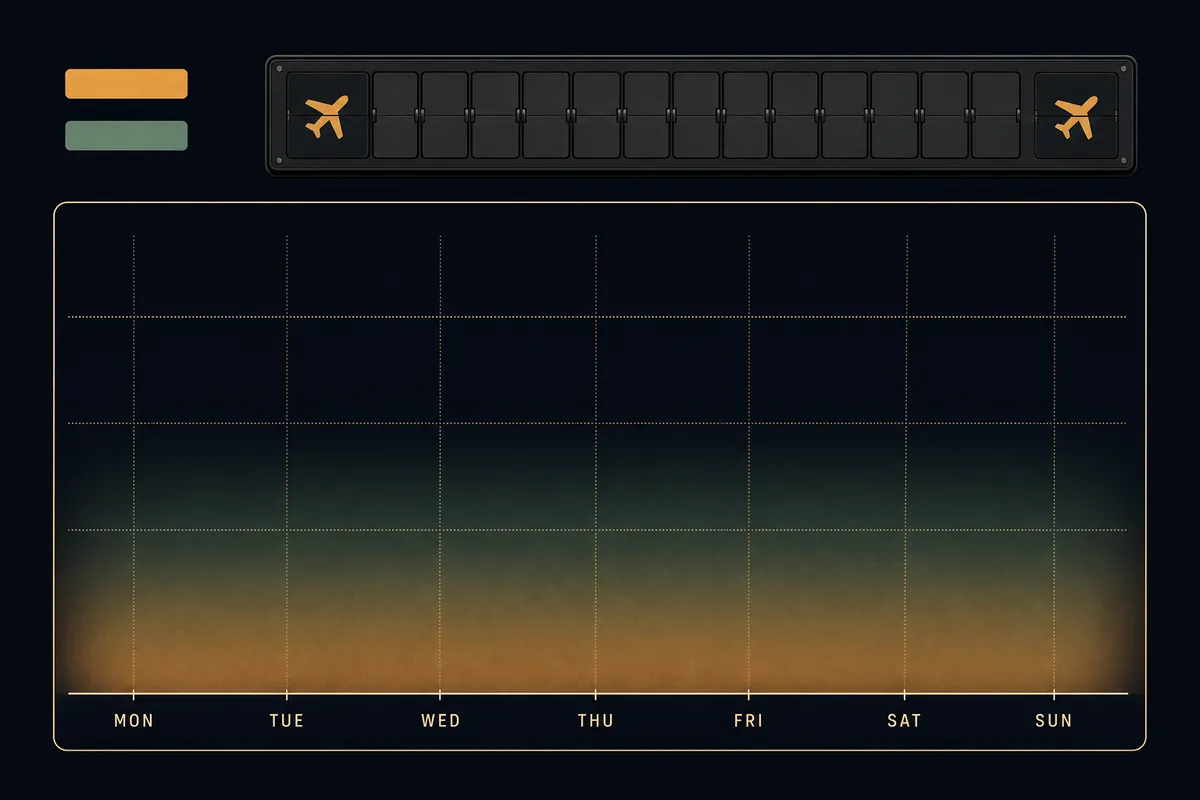
What are the cheapest days to fly in 2026?
The cheapest days to fly are Tuesday and Wednesday, with Monday close behind. For U.S. domestic trips, Expedia's 2026 report puts Tuesday about 14% below Sunday, the priciest day. Google Flights agrees on the shape: across four years of fares, midweek departures run about 13% cheaper than Friday-to-Sunday flights.
96Mon
93Tue
95Wed
100Thu
104Fri
103Sat
106Sun
| Departure day | Fare index | vs. cheapest |
|---|---|---|
| Monday | 96 | +3% |
| Tuesdaycheapest | 93 | — |
| Wednesday | 95 | +2% |
| Thursday | 100 | +8% |
| Friday | 104 | +12% |
| Saturday | 103 | +11% |
| Sunday | 106 | +14% |
Illustrative index synthesized from Expedia's 2026 Air Hacks Report, Google Flights (2021–2025), and Hopper. 100 = the week's average fare; figures are rounded and shift year to year.
The pattern is steady because business and weekend travelers cluster at the start and end of the week. Midweek seats sell slower, so airlines price them lower.
How much do you save by flying midweek?
You save about $56 per ticket flying midweek instead of the weekend on a U.S. domestic trip, according to Hopper. In peak summer the gap widens to $60 or more, and around the holidays it tops $100 per ticket.
On a percentage basis, that is the 13–14% spread between the cheapest and priciest days. At roughly $56 a ticket, a family of four saves about $220 just by shifting the departure day.
What is the most expensive day to fly?
Sunday is the most expensive day to fly, and every major 2026 study agrees. Friday and Saturday come next. Monday and the rest of midweek stay among the cheapest, so the costly stretch is really Friday through Sunday.
Sunday evening carries weekend travelers heading home and business travelers starting their week, so demand — and price — peaks. If your plans flex, moving a Sunday return to Tuesday is the single biggest day-of-week saving you can make.
Is Friday really the cheapest day to fly?
No — Friday is not the cheapest day for U.S. domestic flights.Expedia's 2026 report names Friday the cheapest day to fly internationally, about 8% below Sunday. That number blends worldwide routes.
For domestic trips, Expedia's own data puts Tuesday ahead — about 14% below Sunday. Google Flights and Hopper both point to midweek, Monday through Wednesday, not Friday. So the viral headline is real, but it answers a different question than “When should you fly from a U.S. airport?”
What is the cheapest time of day to fly?
The first flights of the morning and overnight red-eyes are usually the cheapest, because they carry the least demand. No published study attaches a savings figure to time of day, so treat it as a smaller lever than the day or month you choose.
There is a catch that matters more for you: mornings are the busiesttime at security. Expedia's data shows 56% of domestic departuresleave in the morning, so a cheap 6 a.m. flight can meet the longest checkpoint line of the day. That is where your plan comes in — once you pick a cheap day, check your airport's security wait and set your Leave-By Time so an early flight still leaves you room to breathe.
Why cheaper days also mean shorter security lines
The same midweek lull that lowers your fare also shortens your security line. Fewer travelers on a Tuesday mean a faster checkpoint at a busy hub like Atlanta (ATL), Chicago O'Hare (ORD), or Los Angeles (LAX).
One honest exception: the first wave of morning flights bunches up right when the checkpoint opens, so a cheap 6 a.m. fare can still meet a real line. The calmest window is midday midweek — and you never have to guess, because you can check today's security wait for your airport before you leave.
What are the cheapest months to fly in 2026?
The cheapest months to fly are January, August, and September. For U.S. domestic trips, January is the cheapest single month — about 19% below December, the priciest month of the year.
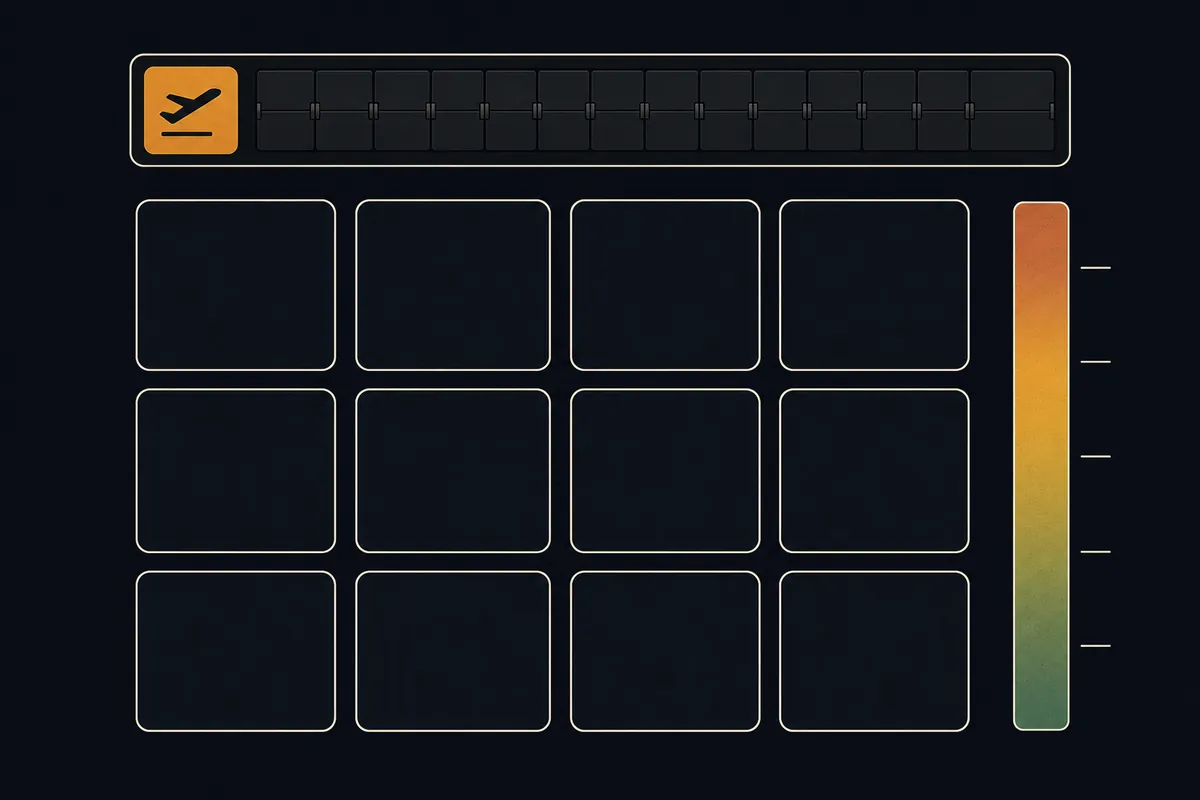
Late August and September are the next-best windows, once the summer rush ends and before the holidays begin. The most expensive months are December, June, and July. Fares fall in the “dead weeks” — the stretch after New Year's and the weeks after Labor Day — when demand drops but flights still run.
When should you book a flight for the best price?
Book U.S. domestic flights about one to two months ahead. Google Flights finds fares bottom out around 39 days before departure, within a low-fare window of 23 to 51 days out.
Expedia's 2026 report is a little more aggressive, naming 15 to 30 days out as the cheapest domestic window — roughly $130 less than booking six or more months ahead. Two rules hold: do not book too early, since six-plus months out costs the most, and the day of the week you book barely matters. The cheapest booking day saves only 1 to 3%, so the old “magic Tuesday” booking rule is no longer worth chasing. How far ahead you book matters far more than when you click.
How we got these numbers
These figures come from the largest public airfare studies of 2025 and 2026, each built on millions of real tickets:
- Expedia's 2026 Air Hacks Report, based on airline booking data through 2025.
- Google Flights, using four years of aggregated fares from 2021 to 2025.
- Hopper and NerdWallet, for per-ticket savings and month-by-month trends.
The public record behind U.S. fares is the Department of Transportation's Airline Origin and Destination Survey. It is a free dataset that sampled about 10% of all airline tickets through mid-2025, and now samples 40% each month. Researchers have used it for decades to study how fares move.
We do not sell flights or show fare quotes here. Our job starts after you pick your day: we show today's security wait at your airport and the time to leave home.
Find your cheapest day and your calmest airport
A cheap ticket only helps if you also make your flight. Pick your airport to see its least-crowded hours at security and get your Leave-By Time for the trip.
Pick your airport to see today's security wait and the time to leave home.
No other tool connects the day you fly to the line you will actually stand in. That is the whole idea here: the cheapest flight and the calmest departure, in one place. Browse live TSA wait times by airport to start.
Before you go: a calmer departure
Once you have booked the cheap fare, the last step is timing the door. A few quick wins for your departure-day:
- Compare a few departure times, not just days — an hour's shift can change both the price and the line.
- Pack for the checkpoint with the 3-1-1 liquids rule in mind: containers of 3.4 ounces or less, one quart-size bag per traveler.
- Fly often? Compare TSA PreCheck vs CLEAR to shave minutes off every trip.
- Set your arrival by today's real wait with how early to arrive at the airport, not a generic rule of thumb.
Set your Leave-By Time once your dates are booked
Your Leave-By Time counts backward from your flight — the drive with live traffic, today's security wait, and the walk to your gate — so you know when to walk out the door, with room to breathe.
Common questions about the cheapest days to fly
What is the cheapest day to fly in 2026?
The cheapest days to fly within the U.S. in 2026 are Tuesday and Wednesday, about 14% below Sunday, the most expensive day.
What is the most expensive day to fly?
Sunday is the most expensive day to fly, followed by Friday and Saturday.
Is Friday really the cheapest day to fly?
For U.S. domestic flights Tuesday is the cheapest day, about 14% below Sunday, while Friday is cheapest only in Expedia's worldwide and international average.
What is the cheapest month to fly in 2026?
January is the cheapest month to fly domestically in 2026, about 19% below December, with late August and September close behind.
How far ahead should you book a flight?
Book U.S. domestic flights about one to two months ahead, since Google Flights finds fares bottom out around 39 days before departure.
Does the day of the week you book a flight matter?
The day you book barely matters, saving only about 1 to 3%, while how far ahead you book matters far more.
Keep planning
Booking
The best time to book airline tickets in 2026
Domestic tickets are cheapest 1–3 months before departure. Here is what the data says about timing, day of week, and seasonal patterns.
BookingHow to find cheap flights: 11 strategies ranked by impact
Flexible dates, the Google Flights date grid, booking windows, nearby airports, and fare alert services — the 11 most effective ways to find cheap flights in 2026 (incognito debunked).
BookingAirline miles explained: how to earn and use them as a beginner
Miles are earned by flying and credit card spending. Redeeming for saver awards gives the most value — here is how it all works.
BookingHow to choose the best airplane seat for your flight
Window for sleeping, aisle for bathroom access, exit row for legroom — here is how seat choice affects your flight and the tools to find the best one.