Flight-day guide
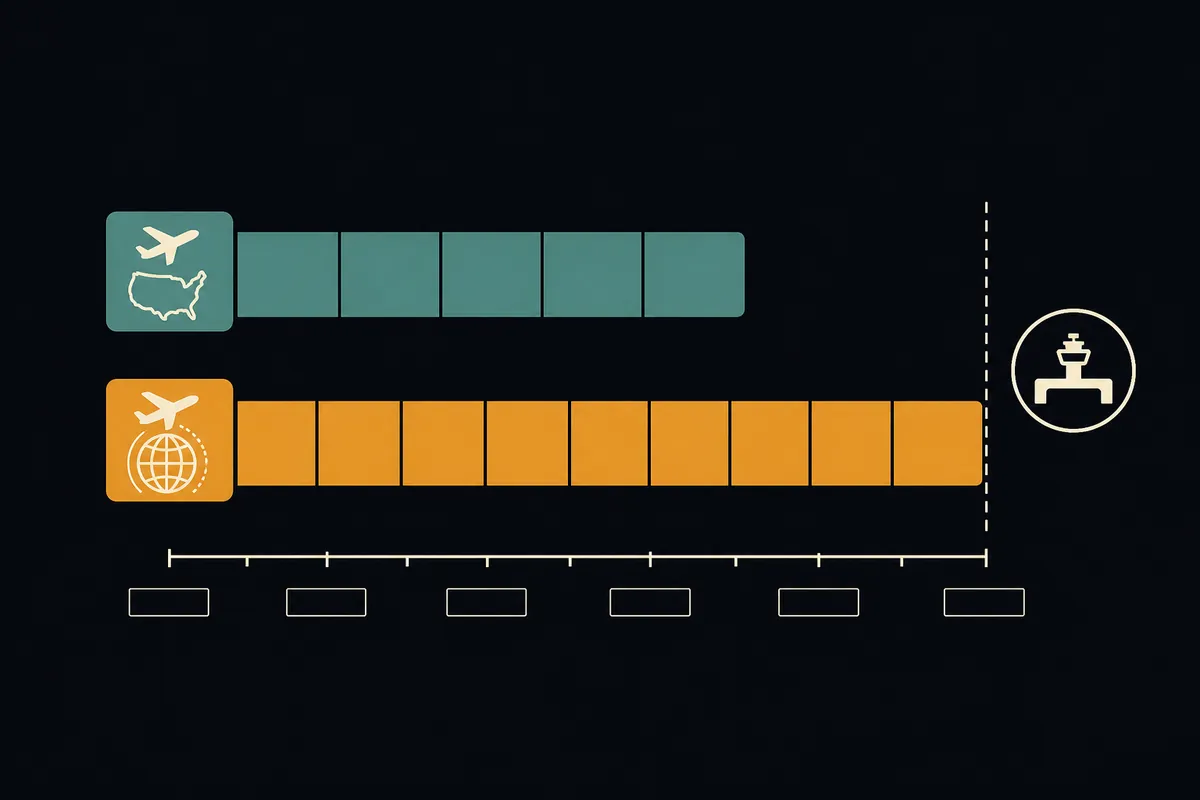
Get to the airport 2 hours early — 3 for international
By the TSA Wait Times team · Updated · Published June 2026
That's the safe baseline: arrive 2 hours before a domestic flight and 3 hoursbefore an international one. But the real answer depends on today's security wait and how long it takes you to drive, park, and reach your gate. Here's how to turn the rule of thumb into the exact minute to leave home.
The short answer, by flight type
Start here, then adjust for the day:
| Flight type | Get there | Why |
|---|---|---|
| Domestic | 2 hours | Bag drop, security, and the walk to your gate. |
| International | 3 hours | Longer lines, document checks, earlier boarding. |
| Big hub or peak day | +30–60 min | Holidays and early mornings fill the lines fast. |
These windows count from the moment you walk in the terminal door — not from when you leave home. And remember the other deadline: most gates close about 15 minutes before departure, so being at the airport is not the same as being at the gate. Your real question is when to leave, and that's where today's numbers come in.
Why a flat rule isn't enough
A flat “2 hours” can leave you waiting at the gate one day and sprinting the next, because security waits swing a lot. The same checkpoint that takes 8 minutes at noon can take 45 on a Friday morning.
Before you trim a single minute, check the live wait for your airport — a quiet checkpoint and a packed one look the same until you are standing in line. That's why we show the live wait where airports publish it, and a predicted wait everywhere else. Drop your flight into the Leave-By Time calculator and it counts backward from boarding — today's security wait included — so you get one clear time to head out.
Add your drive, parking, and the walk to the gate
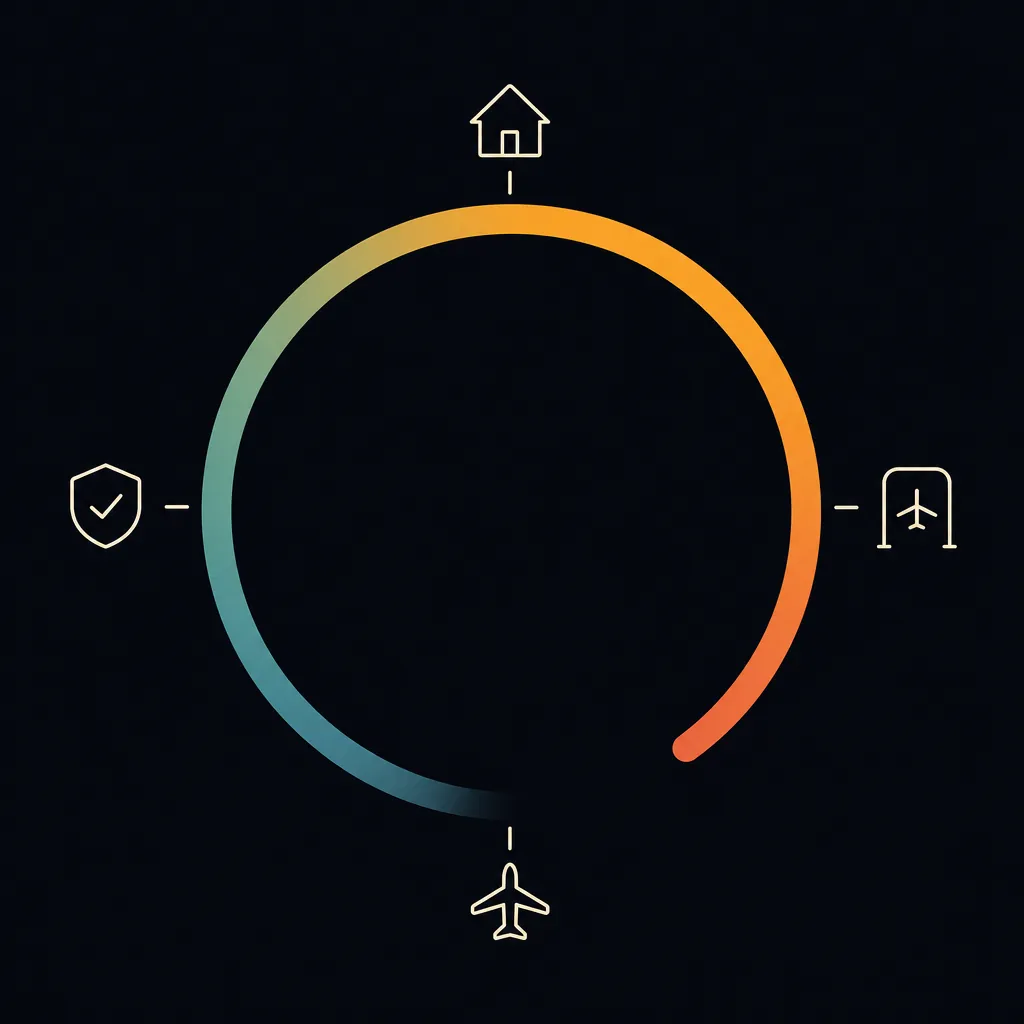
Your arrival window is only half the math. The other half is everything before the terminal door:
- Drive time with live traffic — a 25-minute trip can double at rush hour.
- Parking and the shuttle — cheaper economy lots sit farther out, so add 15 to 20 minutes for the ride in.
- Bag drop — most airlines cut off checked bags 45 to 60 minutes before departure.
- The walk to your gate — large terminals like LAX or ATL can mean a train ride and a 10-minute walk.
The Leave-By Time calculator stacks all of this for you, so you leave with room to breathe instead of a guess.
When to give yourself more time
Add 30 to 60 minutes any time the odds are against a quick line:
- Peak days — the day before Thanksgiving, Sunday afternoons, and early-morning rushes.
- Busy hubs — ORD, LAX, and ATL move huge crowds, and lines build fast.
- No PreCheck — the standard lane runs slower, especially at peak hours.
- Checked bags or a group — every extra step and traveler adds minutes.
- REAL ID — since May 2025 you need a REAL ID-compliant license or a passport to fly within the U.S. Sort that out before you go.
Speed up security so you can arrive later
Three programs can shave time off the line. Here's what they cost in 2026 and what each one does:
- TSA PreCheck — about $77 to $85 for five years, depending on the provider. A shorter, dedicated lane where shoes, belt, and laptop stay put.
- Global Entry — $120 for five years. It includes PreCheck, plus a faster path back through customs when you return from abroad.
- CLEAR Plus — $209 a year, though airline status and some travel cards bring it down. It is a private service that moves you to the front of the ID check; pair it with PreCheck for the shortest path.
Whichever lane you use, the 3-1-1 rule still applies: liquids in containers of 3.4 ounces (100 ml) or less, all in one quart-size bag, one bag per traveler. Packing right keeps your bag from getting pulled for a second look — see what you can bring through security. Still deciding between programs? Compare them in TSA PreCheck vs CLEAR.
Common questions about airport arrival times
How early should I get to the airport for a domestic flight?
Plan to arrive about 2 hours before departure. That leaves room for bag drop, security, and the walk to your gate. Add 30 to 60 minutes on peak days or at a busy hub.
How early should I arrive for an international flight?
Aim for 3 hours before departure. International check-in, document checks, and boarding all start earlier, so the extra hour gives you room to breathe.
Is 2 hours enough time at a big airport?
Usually yes — but check today's security wait first. At large hubs like LAX or ATL, long lines and a long walk to the gate can eat into your window, so 2 hours can feel tight on a busy morning.
Can I arrive later if I have TSA PreCheck?
Often yes. PreCheck's shorter lane can save real time, but it is not a fixed amount. Check the live wait for your airport before you trim your arrival window.
What time should I leave home for my flight?
Count backward from boarding: your drive with live traffic, parking and the shuttle, security, and the walk to your gate. The Leave-By Time calculator does this math and gives you one time to walk out the door.
Get your exact Leave-By Time
You've got the baseline — now make it exact. Enter your airport and flight, and we'll fold in today's security wait, your drive, and parking to give you the one moment to walk out the door.
Keep planning
Flight day
How early for an international flight?
Three hours is the rule of thumb — but the 60-minute check-in cutoff and today's live wait set your real time to leave.
Flight dayCheck-in and bag-drop cutoff times
Most airlines close check-in 45 minutes before a domestic flight, 60 before international. Every cutoff, plus what changed in 2025.
Flight dayMinimum connection time, by hub
The shortest layover an airline will book — about 35 minutes domestic, two hours-plus international. Check yours before you cut it close.
Flight dayWhat to do if your flight is delayed or canceled
What airlines must give you under US law, how to rebook fast, and when you are owed a cash refund.