Data · Security wait times by hour
The best (and worst) time of day to go through airport security
By the TSA Wait Times team · Updated · Published July 2026
The modeled security wait at America's 32 largest airports nearly triples between 5 AM (10 minutes) and the 8 AM morning peak (29 minutes) — and the single worst hour of the day is 6 PM, at 30 minutes, according to tsawaittimes.app's forecasting model — the same model behind our live airport pages. The day has two rushes and two genuine lulls, and knowing which side of them you land on is worth about twenty minutes of your life. Every figure on this page is a modeled estimate, not a TSA measurement; the full hour-by-hour table and the peak hour at each of the 10 biggest airports are below.
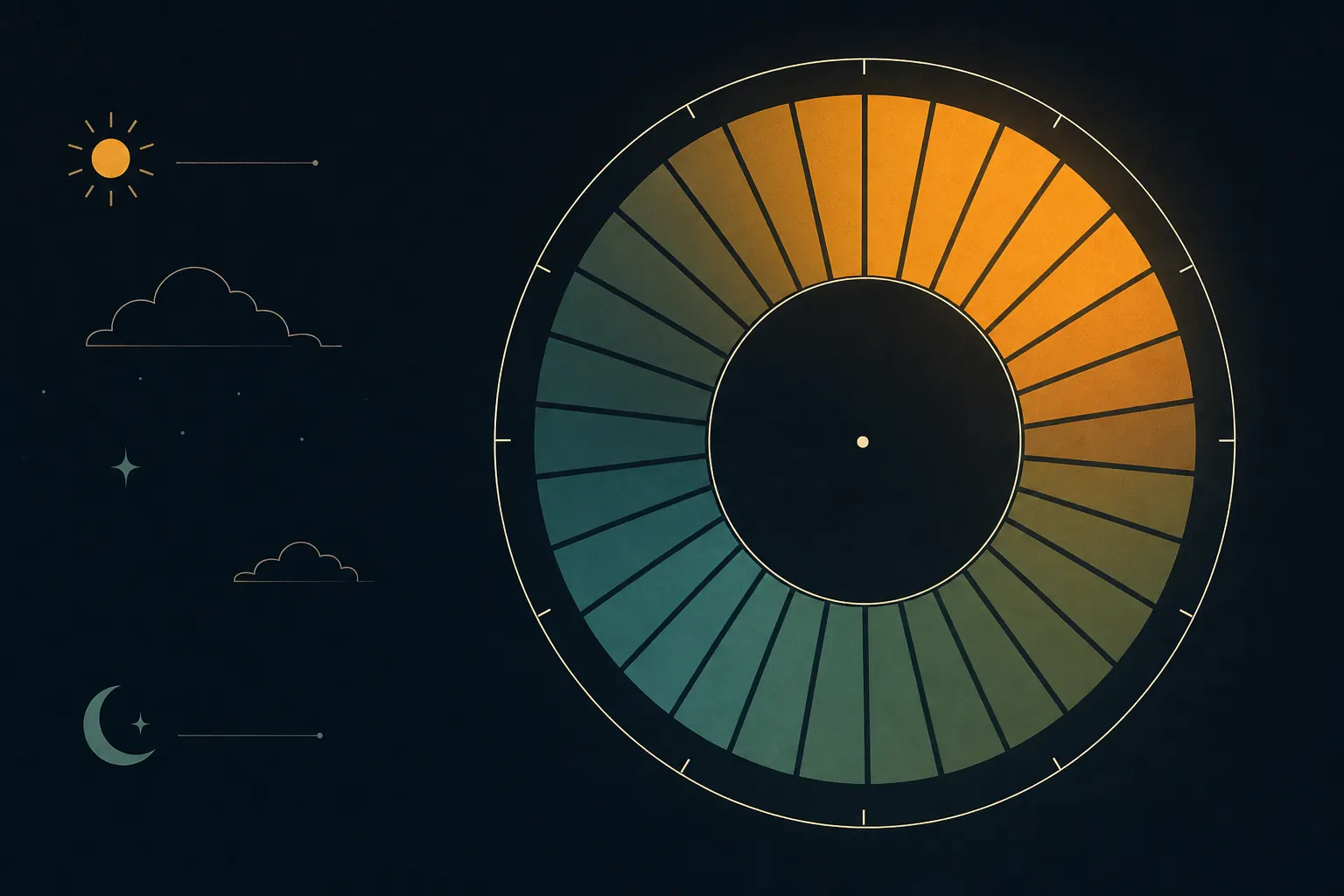
Security wait times by hour of day: the national table
This is our model's typical-day curve — the mean modeled standard-lane wait across the 32 largest U.S. airports, by local hour, from 4 AM to 11 PM. Overnight (midnight to 4 AM) the modeled wait sits at 5–7 minutes, but most checkpoints run limited lanes then and few flights depart.
| Hour (local) | Modeled avg wait | Read |
|---|---|---|
| 4 AM | 6 min | |
| 5 AM | 10 min | Quietest reasonable hour |
| 6 AM | 17 min | |
| 7 AM | 26 min | Morning rush |
| 8 AM | 29 min | Morning peak |
| 9 AM | 25 min | Morning rush |
| 10 AM | 19 min | |
| 11 AM | 17 min | Lull |
| 12 PM | 19 min | |
| 1 PM | 20 min | |
| 2 PM | 19 min | |
| 3 PM | 17 min | Lull |
| 4 PM | 19 min | |
| 5 PM | 25 min | Evening rush |
| 6 PM | 30 min | Worst hour of the day |
| 7 PM | 28 min | Evening rush |
| 8 PM | 22 min | |
| 9 PM | 16 min | |
| 10 PM | 11 min | |
| 11 PM | 8 min |
Modeled estimates from the tsawaittimes.app forecasting model, snapshot July 2026; standard lanes only, no day-of-week or seasonal term. For scale, TSA's own service standard is under 30 minutes in standard lanes and under 10 in PreCheck lanes — the national curve brushes that standard-lane benchmark only at the two daily peaks.
The 8 AM problem
The steepest climb of the day happens before most people have finished their coffee. Between 5 AM and 8 AM the modeled national wait rises from 10 to 29 minutes — nearly tripling in three hours — as the first big departure bank of the day funnels everyone through the checkpoint at once. The rush holds through 9 AM (25 min) and only unwinds by 10 AM (19 min).
The practical read: for a morning flight, earlier is genuinely easier. A 6 AM departure puts you in a 10-minute line; a 9:30 AM departure puts you in the thick of the 29-minute peak. If you must fly mid-morning, that's exactly when a live check of your airport's current wait earns its keep.
The mid-afternoon lull
Between the two rushes sits the day's best-kept secret: from about 10 AM to 4 PM, the modeled national wait stays in a 17–19-minute band, bottoming at 11 AM (17 min) and again at 3 PM (17 min). A 1 PM flight typically means roughly two-thirds of the 6 PM line — without the pre-dawn alarm. Then the evening bank builds fast: 5 PM hits 25 minutes, 6 PM tops out at 30, and the curve doesn't drop back below 20 minutes until about 9 PM.
Peak hour at the 10 biggest U.S. airports
The double-hump shape is national, but which hump wins differs by airport. In our model, morning-peak airports (LAX, JFK, DEN) crest around 8 AM, while evening-peak airports (ATL, DFW, ORD) crest around 6 PM. The ten below are the largest U.S. airports by FAA 2024 enplanements, in order.
| Airport | Peak hour | Peak wait | Best hour | Best wait |
|---|---|---|---|---|
| Atlanta (ATL) | 6 PM | 29 min | 5 AM | 9 min |
| Dallas/Fort Worth (DFW) | 6 PM | 26 min | 5 AM | 7 min |
| Denver (DEN) | 8 AM | 30 min | 5 AM | 8 min |
| Chicago O'Hare (ORD) | 6 PM | 30 min | 5 AM | 11 min |
| Los Angeles Int'l (LAX) | 8 AM | 36 min | 5 AM | 12 min |
| New York · JFK (JFK) | 8 AM | 24 min | 5 AM | 7 min |
| Charlotte (CLT) | 6 PM | 25 min | 5 AM | 8 min |
| Las Vegas (LAS) | 6 PM | 28 min | 5 AM | 8 min |
| Orlando (MCO) | 6 PM | 26 min | 5 AM | 7 min |
| Miami (MIA) | 6 PM | 29 min | 5 AM | 11 min |
Airports ordered by FAA CY2024 enplanements. Waits are modeled typical-day estimates (standard lanes); best hour searched over 5 AM–9 PM. Per-airport differences come from the model's scaling — treat them as our model's estimate, not a measured ranking. Every airport's live page (e.g. Denver (DEN)) shows today's actual picture.
Day of week matters too
Our hour-by-hour model deliberately carries no day-of-week term, but TSA's own daily checkpoint counts show how much the day you fly moves the baseline. Across full-year 2025, Sundays averaged 2,736,967 passengers — about 21% more than Tuesdays (2,163,030), and 8 of the 10 busiest days in TSA history were Sundays.
| Day | Avg passengers screened (2025) |
|---|---|
| Sunday | 2,736,967 |
| Friday | 2,680,908 |
| Thursday | 2,645,478 |
| Monday | 2,622,744 |
| Saturday | 2,274,417 |
| Wednesday | 2,270,028 |
| Tuesday | 2,163,030 |
Computed from TSA daily checkpoint data, tsa.gov/travel/passenger-volumes, full-year 2025. The combination to aim for: a Tuesday or Wednesday mid-afternoon. The one to avoid: a Sunday at 6 PM. Our companion study on the busiest days to fly covers holidays and record days in full.
How to use these numbers
- Book against the curve when you can. A pre-7 AM or 1–3 PM departure on a Tuesday or Wednesday puts every average in your favor before you've done anything clever.
- Turn the curve into an arrival time. Our guide on how early to arrive at the airport converts peak vs off-peak into a concrete buffer, and the Leave-By Time calculator counts backward from your flight using your airport's current wait.
- Check the airport, not just the average. Whether your airport peaks in the morning or the evening (table above) matters more than the national mean — and how your airport compares overall is in the 2026 TSA Wait Index.
Methodology
The national hour-by-hour table is the mean of the typical-day curves our forecasting model produces for the 32 largest U.S. airports; the per-airport peak/best hours come from the same snapshot. Day-of-week figures are separate — computed from TSA's published daily checkpoint counts, not from our model.
All wait figures are FIRST-PARTY MODELED ESTIMATES produced by tsawaittimes.app’s own forecasting model (the same Tier-B model that powers the live site), computed 2026-07-03 for the launch set of 32 large U.S. airports. They are not TSA or government measurements. For this snapshot every airport was computed via the model’s deterministic typical-day curve (an overnight lull with ~8 AM and ~6 PM peaks) scaled per airport, clamped to 4–75 minutes; the flight-schedule-density input was unavailable at run time. The national hour-by-hour shape is the model’s real typical-day curve, but per-airport differences come from the model’s seeded scaling — treat per-airport rows as “our model’s typical-day estimate,” never as a measured ranking of airports. Averages weight operating hours (4 AM–10 PM) at 1.0 and overnight hours at 0.25. Standard lanes only; 11 of the 32 airports also have live Tier-A checkpoint feeds (marked “live”). No day-of-week or seasonal term is included. Values rounded to whole minutes.
How the underlying live and predicted data works is documented on our how-it-works page.
Cite or share this data
You are welcome to republish the tables and charts on this page — including in news articles — with a link back. The dataset is released under CC BY 4.0.
Source: tsawaittimes.app — The best (and worst) time of day to go through airport security, 2026.
https://tsawaittimes.app/data/best-time-to-go-through-security
What is the best time of day to go through airport security?
Around 5 AM. In our model's typical-day curve across the 32 largest U.S. airports, the 5 AM hour averages a 10-minute standard-lane wait — the lowest of any reasonable departure hour. The late-morning (around 11 AM, 17 minutes) and mid-afternoon (around 3 PM, 17 minutes) lulls are the best options if a pre-dawn flight isn't on the table. These are modeled estimates from tsawaittimes.app's forecasting model, not TSA measurements.
When is airport security busiest?
Two windows: the morning rush around 8 AM (29-minute modeled average across the 32 largest U.S. airports) and the evening rush around 6 PM (30 minutes — the single worst hour of the day in our model). By day of week, Sundays are busiest at TSA checkpoints (2,736,967 average passengers in 2025, per TSA daily data) and Tuesdays are quietest, about 21% below Sunday.
Is airport security faster in the morning or the afternoon?
It depends which part of the morning. Before about 6 AM, security is at its emptiest all day; by 8 AM it hits its morning peak. The early-to-mid afternoon (roughly 11 AM to 4 PM) sits in a genuine lull — modeled waits of 17 to 20 minutes — before the evening rush builds after 5 PM. So the ranking, per our model: pre-6 AM first, mid-afternoon second, and the 8 AM and 6 PM rushes last.
What day of the week is airport security least busy?
Tuesday. TSA's own daily checkpoint counts for full-year 2025 put Tuesday last at 2,163,030 average passengers — about 21% below Sunday, the busiest day (2,736,967). Wednesdays and Saturdays are nearly as quiet. Sundays, Fridays, and Thursdays carry the most passengers, and 8 of the 10 busiest days in TSA history were Sundays.
Flying at a peak hour? Time it, don't sweat it
Your Leave-By Time counts backward from your flight using today's security wait, the drive, and the walk to your gate — so an 8 AM or 6 PM departure becomes a solved problem, not a gamble.
Get your Leave-By Time