Booking
Airline miles explained: how to earn and use them as a beginner
By the TSA Wait Times team · Updated · Published June 2026
Airline miles are earned every time you fly or spend on a co-branded credit card — and they can be redeemed for free flights at 1.2–1.5 cents of value per mile on domestic saver awards and as much as 5–8 cents per mile on international business class. This guide walks through every step: opening your first frequent flyer account, earning miles without ever leaving the ground, and booking your first award ticket.
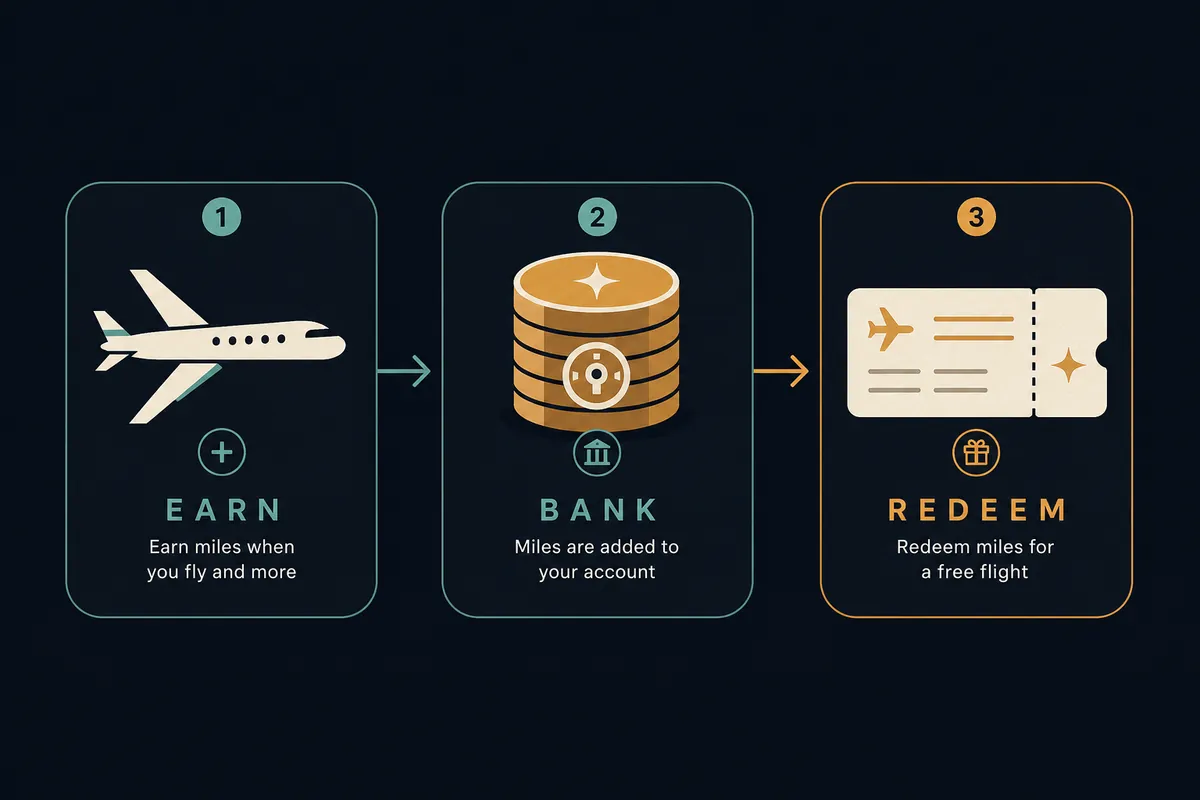
What are airline miles and how do they differ from flexible travel points?
Airline miles are loyalty currency tied to one specific airline program — Delta SkyMiles, United MileagePlus, or American AAdvantage. Flexible points (Chase Ultimate Rewards, Amex Membership Rewards, Citi ThankYou) are earned on general-purpose cards and can transfer to multiple airline programs, giving you more options. Beginners often start with one airline program first, then layer in flexible points once they understand redemption patterns. The key difference: airline miles lock you into one carrier's network; flexible points keep your options open.
- Delta SkyMiles, United MileagePlus, American AAdvantage — tied to one airline's network
- Chase Ultimate Rewards transfers to United, Southwest, British Airways, Air France/KLM and more
- Amex Membership Rewards transfers to Delta, Air Canada Aeroplan, British Airways, and others
- Citi ThankYou transfers to American, Air France/KLM, Turkish Airlines, and others
- Transfer ratios are usually 1:1 and take 1–3 business days to post
How do you earn airline miles without flying?
Co-branded credit cards are the fastest way to accumulate miles without boarding a plane — a single welcome bonus (typically 50,000–70,000 miles after meeting a spend requirement) can be worth one or two domestic round-trips. Shopping portals run by Delta, United, and American let you earn 1–5 extra miles per dollar when you click through to retailers before buying. Airline dining programs add 3–5 miles per dollar at thousands of participating restaurants when you register a credit card. Hotel and car-rental partners, online surveys, and magazine subscriptions round out the non-flying options.
- Co-branded card welcome bonus: 50,000–70,000 miles after spending $3,000–$4,000 in 3 months (2026 typical)
- Shopping portals: 1–5 miles per dollar — use CashbackMonitor.com to find the best portal rate before buying
- Dining programs: 3–5 miles per dollar at participating restaurants; register any Visa/Mastercard, not just the airline card
- Hotel transfers: Marriott Bonvoy converts to most major airlines at roughly 3:1 (60,000 Marriott = 20,000 airline miles)
- Partner activities: rental cars, ride-share, cruises, and even some grocery purchases
How many miles does a flight actually earn?
Most US airlines switched to revenue-based earning around 2015, so the miles you earn now depend on the ticket price, not the distance flown. A $200 domestic ticket on United earns roughly 200 base miles (1 mile per dollar) for a basic economy fare, rising to 500 miles (2.5x) for a Premier member. Delta and American use similar multipliers tied to fare class and status. Co-branded cardholders earn an extra 1–3 miles per dollar on top of the base rate when paying with their airline card.
- Basic/economy fares: 1–2 miles per dollar spent on the ticket
- Main cabin (standard): 2–3 miles per dollar with status or co-branded card
- Business/first class: 3–6 miles per dollar depending on fare class and status
- Always pay for flights with your co-branded airline card to stack card miles on top of flight miles
What is the best way to redeem miles for maximum value?
Domestic saver economy awards deliver the most reliable value for beginners — you can often find round-trips for 15,000–25,000 mileson routes that cost $200–$300 in cash, yielding 1.2–1.5 cents per mile. International business class is where serious points enthusiasts find exceptional value: a $3,000–$4,000 lie-flat seat can cost 50,000–70,000 miles, pushing value above 5 cents per mile. The worst redemptions are merchandise, gift cards, and pay-with-miles options where airlines credit you a flat 1 cent or less per mile regardless of the seat's actual cash value.
| Redemption type | Value per mile | Example (2026) |
|---|---|---|
| Domestic economy saver award | 1.2–1.5 cents | 15,000 miles ≈ $200 RT (Delta WAS–CVG) |
| International business class | 4–8 cents | 60,000 miles = $3,000–$4,800 lie-flat seat |
| Delta / United Pay with Miles | ~1.0 cent | Fixed rate — decent in a pinch, not a deal |
| Gift cards or merchandise | 0.3–0.6 cents | Avoid — cuts your miles' value in half or worse |
When do airline miles expire?
Several major US carriers — Delta, United, Southwest, Alaska, and JetBlue — have eliminated expiration entirely, so your balance is safe as long as the program exists. American AAdvantage miles still expire after 24 months of account inactivity; any earning or redemption activity (including a small portal purchase) resets the clock for another 24 months. Note: United MileagePlus previously expired miles after 18 months of inactivity but changed that policy — United miles no longer expire. International programs such as British Airways Avios (36 months) and Air Canada Aeroplan (18 months) still have active inactivity clocks.
| Program | Miles expire? | How to keep them active |
|---|---|---|
| Delta SkyMiles | Never | No action needed |
| United MileagePlus | Never (policy changed) | No action needed |
| Southwest Rapid Rewards | Never | No action needed |
| Alaska Mileage Plan | Never | No action needed |
| JetBlue TrueBlue | Never | No action needed |
| American AAdvantage | Yes — 24 months inactivity | Earn via shopping portal, dining, or card spend |
| British Airways Avios | Yes — 36 months inactivity | Earn via shopping portal or BA partner |
| Air Canada Aeroplan | Yes — 18 months inactivity | Any earn or redeem activity resets clock |
Which co-branded airline credit card should a beginner get first?
The right card depends on which airline you fly most. If you fly one carrier more than 75% of the time, that airline's co-branded card is the obvious pick — the welcome bonus alone often covers one or two domestic round-trips, and you get perks like free checked bags and priority boarding that pay back the annual fee. If you are brand-agnostic, a flexible-points card like Chase Sapphire Preferred earns Ultimate Rewards that transfer to United, Southwest, and international carriers, giving you more options. Avoid opening multiple airline cards at once — focus on earning and spending one welcome bonus before adding another.
- United Explorer (Chase): 3x miles on United, 2x on dining and hotels, 1x all else; free checked bag
- Delta SkyMiles Gold (Amex): 2x on Delta, restaurants, US supermarkets; free first checked bag
- Citi AAdvantage Platinum Select: 2x on American, dining, gas stations; free first checked bag
- Chase Sapphire Preferred (flexible): 3x dining, 2x travel, transfers to United/Southwest/BA/Air France and others
- Beginner tip: The checked bag benefit on a $99–$150 annual-fee card often saves $140–$200/year for two checked bags round-trip. See airline baggage fees compared to run the math for your airline.
For check-in policies and bag rules by carrier, visit the airline guides hub.
Data verified . Sources: NerdWallet miles expiration guide; AwardWallet AAdvantage expiry; Delta travel with miles; The Miles Market 2026 expiry roundup.
Know your Leave-By Time before you use those miles
Award tickets are only useful if you catch your flight. Use the Leave-By Time calculator to see live TSA wait times at your departure airport, fold in your airline's bag-drop cutoff, and get the exact moment to walk out the door.
See your Leave-By Time →Keep planning
Booking
The cheapest days and times to fly
Tuesday and Wednesday are reliably cheaper — and lighter at security. See the cheapest times, with an honest 2026 caveat.
BookingThe best time to book airline tickets in 2026
Domestic tickets are cheapest 1–3 months before departure. Here is what the data says about timing, day of week, and seasonal patterns.
BookingHow to find cheap flights: 11 strategies ranked by impact
Flexible dates, the Google Flights date grid, booking windows, nearby airports, and fare alert services — the 11 most effective ways to find cheap flights in 2026 (incognito debunked).
BookingHow to choose the best airplane seat for your flight
Window for sleeping, aisle for bathroom access, exit row for legroom — here is how seat choice affects your flight and the tools to find the best one.