International
International travel checklist: everything before you fly
By the TSA Wait Times team · Updated · Published June 2026
International travel fails at the gate — wrong passport validity, no visa, no travel insurance. This checklist covers everything from 3 months out to the morning you leave.
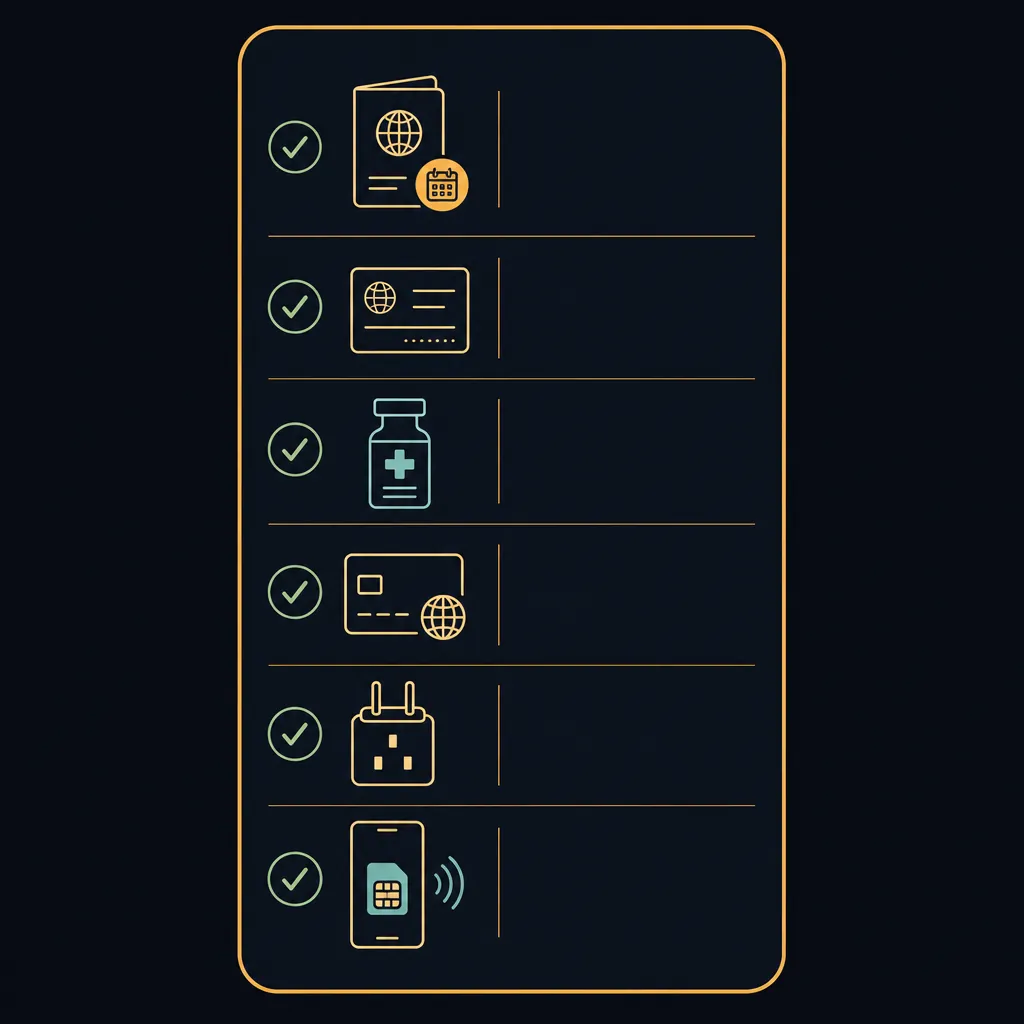
3+ months before travel
Passport
- Validity: most countries require your passport to be valid for at least 6 months after your return date. Check both your destination and any layover countries — transit rules vary.
- Blank pages: at least 2 blank pages required by many countries for entry stamps; some require more. Count them before you book.
- Renewal timeline 2026: US passport renewal by mail currently takes 8–10 weeks routine, 5–7 weeks expedited. In-person appointments at passport agencies take 2–3 business days but require proof of imminent travel (a booking confirmation with departure within 14 days).
Visa
- Check your destination's visa requirements at travel.state.gov— the US government's official source, organized by country.
- Visa categories: tourist visa, e-visa (apply online), visa on arrival, or no visa required. E-visas often take 24–72 hours; paper visas can take 2–8 weeks, so apply early.
- Apply for Global Entry or NEXUS if you travel internationally more than once a year — processing now takes 3–6 months (interview required), but you also get TSA PreCheck for domestic flights.
Health
- Check CDC recommended vaccines for your destination at cdc.gov/travel. Some countries require proof of certain vaccinations (yellow fever, etc.) at the border — not just a recommendation.
- Prescription medications: get a 30-day supply excess and keep all medications in their original labeled bottles when traveling internationally.
Travel insurance
- Your credit card may already cover medical emergencies, trip cancellation, and lost baggage — verify your card's specific coverage before relying on it for international trips.
- If card coverage is limited, consider a standalone travel insurance policy — especially for medical evacuation, which credit cards rarely include.
1–4 weeks before travel
Bookings
- Confirm your international flight booking has your name exactly as it appears on your passport — mismatches can cause check-in problems, especially internationally.
- Add your Known Traveler Number (Global Entry PASSID) to all bookings to receive TSA PreCheck on qualifying flights.
- Download your airline's app and enroll in check-in and flight status notifications.
- Book your airport transfer or research public transit to and from your hotel at the destination — do this now, not at midnight when you land.
Technology
- International phone plan: add a daily plan to your US carrier ($5–10/day for most), or set up an eSIM through a service like Airalo or Holafly before you leave, or plan to buy a local SIM on arrival.
- Download offline maps (Google Maps offline areas) for your destination — essential if you're navigating on a local SIM with limited data.
- Set up mobile payment (Apple Pay / Google Pay) — widely accepted internationally and reduces card skimming risk at foreign ATMs and shops.
Money
- Notify your bank of your travel dates and destination — many cards are frozen for suspected fraud when charges appear in a foreign country without advance notice.
- Know your card's foreign transaction fees. Cards with 0% foreign transaction fees include Chase Sapphire, Capital One Venture, and Charles Schwab debit.
- Avoid airport currency exchange booths if possible — the rates are poor. Use ATMs at your destination or get a small amount of foreign currency from your bank before you leave.
- Keep $100–200 USD cash as an emergency backup — universally accepted as an exchange currency if your card fails.
48–72 hours before travel
Documents
- Scan your passport, visa, travel insurance policy, hotel confirmation, and itinerary — email copies to yourself and save them offline on your phone.
- Take a photo of your packed bag contents before closing it — makes a lost or delayed luggage claim significantly easier to file.
Check-in
- Check in online — most international airlines open check-in 24 hours before departure; some open 48 hours for long-haul routes.
- Confirm your seat assignment and download your boarding pass to the airline app so it is accessible offline.
Know your arrival airport
- Download the CBP Mobile Passport Control app if you are returning to the US — it lets eligible travelers complete their customs declaration digitally and use a faster dedicated lane at 40+ US airports.
- Research Automated Passport Control (APC) kiosks at your destination — many international airports have them for faster self-service processing on arrival.
Day of departure
Arrive at the airport 3 hours before departure — most airlines recommend this for international flights. That window accounts for the earlier check-in cutoff (60 minutes for international versus 45 for domestic), a passport document check, and earlier boarding on wide-body aircraft. For a full breakdown of why the extra hour matters, see how early to arrive for an international flight.
Carry-on essentials
- Passport — keep on your person or in your carry-on, never in your checked bag.
- All visas and entry documents — printouts recommended as a backup alongside digital copies in case of connectivity issues.
- Travel insurance policy and emergency contact numbers — stored in your phone and on a physical backup.
- Prescription medications — minimum a 2-week supply in carry-on, not in checked baggage, in original labeled bottles.
- Power adapter for your destination — check the plug type before you leave. A universal travel adapter covers most countries.
- Empty water bottle (fill after security), neck pillow, eye mask, and earplugs for long-haul comfort.
At the airport
- If buying duty-free liquids for international travel, keep the sealed bag and receipt — you may need to show both at international connections for re-screening.
- If you must exchange currency at the airport, use a bank-operated booth — avoid the first-row kiosks near arrivals, which typically have the worst rates. Better to withdraw from an ATM at your destination.
At customs and immigration
Leaving the US
- You do not fill out a customs declaration form when departing the US — only on return.
- There is no restriction on how much currency you can carry out, but you must declare $10,000 or more in cash or monetary instruments.
Returning to the US
- Fill out the CBP customs declaration form on the plane — or use the Mobile Passport Control app to complete it digitally before landing and use the faster dedicated lane.
- Declare any purchased goods over the $800 per-person duty-free exemption. Undeclared goods above the limit can be seized.
- Most fresh fruits, vegetables, and meats are not allowed into the US — declare what you have or dispose of it before reaching the customs officer.
- Global Entry members: skip the standard customs queue and use the kiosk — your PASSID expedites processing. Enrollment guide: Global Entry enrollment step by step.
Frequently asked questions:
How much passport validity do I need for international travel?
Most countries require at least 6 months of passport validity beyond your return date. Always check the specific rules for your destination and any countries you transit through.
Do I need a visa to travel internationally from the US?
It depends on the destination. US citizens do not need a visa for most of Western Europe, Mexico, Canada, and many other countries. Check travel.state.gov for the official requirement for your specific destination.
What is the CBP Mobile Passport Control app?
A free US Customs and Border Protection app that lets eligible travelers complete their customs declaration digitally, often using a separate, faster arrival lane at 40+ US airports. Available to US citizens and certain visa holders.
Can I use my credit card internationally without extra fees?
Many premium cards — Chase Sapphire, Capital One Venture, Amex Platinum — charge no foreign transaction fees. Standard cards often charge 3% per transaction. Check your card terms before traveling.
Related guides
- How early to arrive for an international flight
- Global Entry enrollment step by step
- Travel insurance for flights
- Flight delay compensation
Get your exact Leave-By Time
You've got the full checklist — now make sure you leave home at the right moment. Enter your airport and international flight, and we'll fold in today's live security wait, your drive, and parking to give you the one time to walk out the door.