PreCheck
NEXUS card guide: the best-kept secret for US-Canada travelers
By the TSA Wait Times team · Updated · Published June 2026
NEXUS is a joint US-Canada trusted traveler program that most Americans have never heard of — even though it does more than Global Entry for anyone who crosses the border regularly. You get TSA PreCheck at every US airport, dedicated lanes at US-Canada land borders in both directions, and NEXUS air kiosks entering Canada. As of October 2024, the price is $120 for five years — the same as Global Entry, and still a better deal if Canada is your primary international destination.
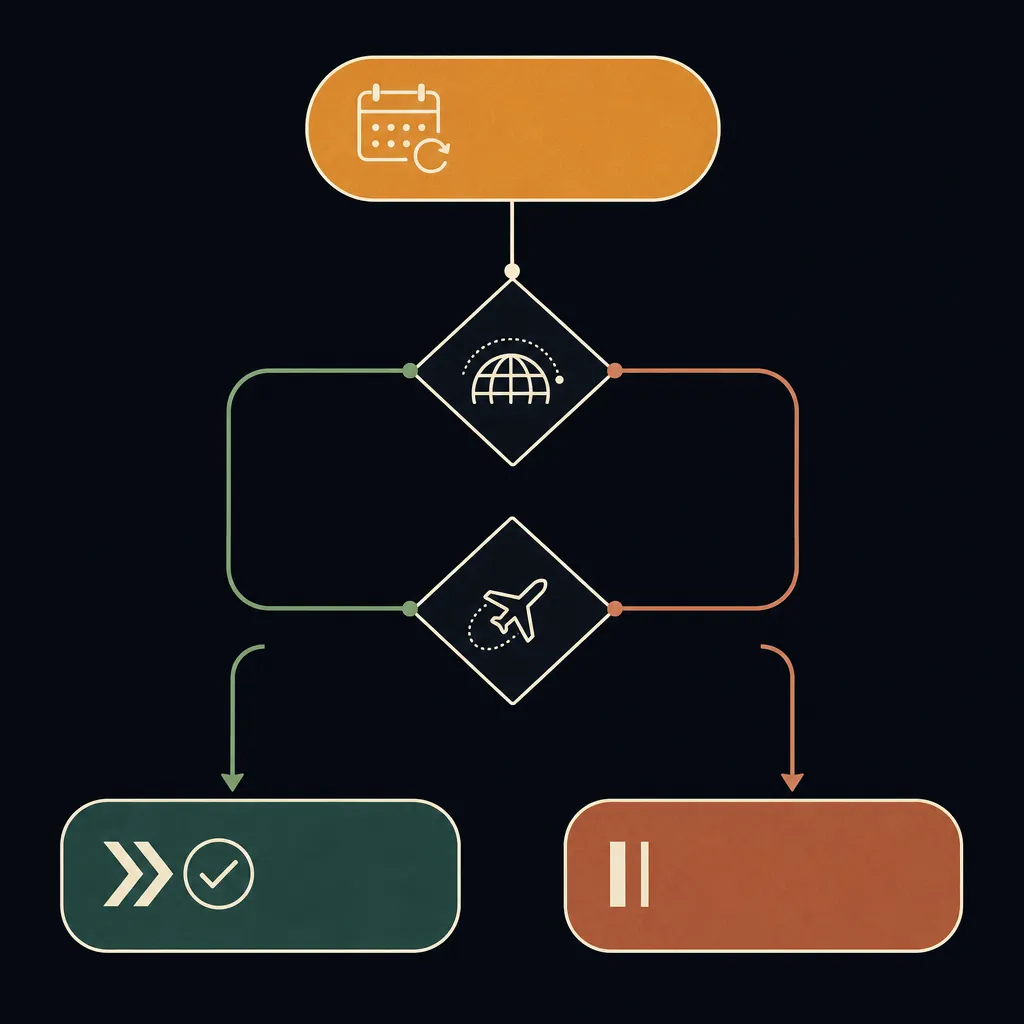
NEXUS costs $120 for five years — and is worth every cent for US-Canada travelers
As of October 1, 2024, NEXUS costs $120 USD for a five-year membership, up from the long-standing $50 price. The fee increase was announced by CBP in April 2024 via Federal Register rule 2024-06852 and took effect at the start of Q4. Simultaneously, Global Entry rose from $100 to $120 — both programs are now the same price. The fee is non-refundable regardless of outcome. Children under 18 are exempt when a parent or legal guardian is already a NEXUS member or applies at the same time. A $25 non-refundable replacement fee applies if your card is lost, stolen, or damaged.
- $120 USD for 5 years (raised from $50 effective October 1, 2024)
- Children under 18 are free when a parent or guardian applies concurrently or is already a member
- $25 replacement fee for a lost or damaged card (non-refundable)
- Fee is non-refundable regardless of whether your application is approved or denied
What NEXUS membership actually gives you: four benefits in one card
NEXUS is a joint program managed by US Customs and Border Protection (CBP) and the Canada Border Services Agency (CBSA). It covers the entire US-Canada corridor — not just one direction or one mode of travel. US domestic travelers also get TSA PreCheck access included at no additional charge.
- TSA PreCheck at all US airports and territories — no separate application or fee required
- Dedicated NEXUS lanes at US-Canada land border crossings in both the northbound and southbound directions
- NEXUS air kiosks when entering Canada at participating Canadian airports
- Global Entry kiosk access when entering the US via Canadian Preclearance airports (YYZ, YVR, YUL, YYC, YEG, YOW, and others)
- Expedited processing at US-Canada marine reporting locations
The Global Entry kiosk benefit is limited to flights departing from Canadian Preclearance airports. If you fly into a US airport from Europe, Asia, or elsewhere, your NEXUS card will not work at the Global Entry kiosks at that airport.
NEXUS vs. Global Entry vs. TSA PreCheck: side-by-side comparison
NEXUS and Global Entry are now the same price at $120 for five years, so the decision comes down entirely to your travel patterns. The table below shows which program fits which traveler:
| Program | Cost (5 yrs) | PreCheck | Best for |
|---|---|---|---|
| NEXUS | $120 | Yes | US-Canada border travelers |
| Global Entry | $120 | Yes | International arrivals from any country |
| TSA PreCheck | $85 | Yes | Domestic US flyers, cheapest option |
| SENTRI | $120 | No | US-Mexico border travelers |
SENTRI covers Global Entry benefits but does not include TSA PreCheck access; a separate PreCheck enrollment is required. Spirit Airlines ceased operations in May 2026 and is no longer a factor in PreCheck enrollment.
- Choose NEXUS if most of your international travel is US-Canada by land or air
- Choose Global Entry if you frequently arrive in the US from Europe, Asia, or other non-Canadian regions
- TSA PreCheck only is the right choice for domestic-only US travelers who want the cheapest security lane option
- NEXUS does not substitute for Global Entry at non-Canadian-preclearance US airports — you need Global Entry for arrivals from Europe or Asia
Who is eligible for NEXUS?
NEXUS is a joint program managed by two governments, so eligibility and background checks are stricter than domestic trusted traveler programs. All applicants must pass independent reviews by both US CBP and Canada CBSA before being invited to interview.
- US citizens and US lawful permanent residents
- Canadian citizens and Canadian lawful permanent residents
- Mexican nationals enrolled in Mexico's Viajero Confiable trusted traveler program
- Not eligible: applicants with criminal convictions, customs or immigration violations, or who provide false information on the application
If you have been denied for Global Entry or CLEAR in the past, or have any customs violations in your history, you should resolve those issues before applying to NEXUS — CBSA and CBP each have independent grounds for denial, and a denial by either agency closes the application.
How to apply for NEXUS: five steps from application to card
Apply through the official Trusted Traveler Program website at ttp.dhs.gov. Both CBP and CBSA must independently review and approve your application before you are invited to schedule your in-person interview. Most enrollment centers are at or near US-Canada border crossings; a smaller number are at major airports.
- Step 1: Create an account and submit your application at ttp.dhs.gov
- Step 2: Pay the $120 non-refundable fee at time of application
- Step 3: Wait for conditional approval from both US CBP and Canada CBSA — this can take a few weeks to several months
- Step 4: Schedule and attend an in-person interview at a NEXUS enrollment center (bring your passport and proof of citizenship or permanent residence)
- Step 5: Receive your NEXUS card by mail after final approval — your KTN becomes active immediately
How long does NEXUS take? Interview wait times and enrollment center locations
Wait times for a NEXUS interview vary significantly by enrollment center and season. Most centers are located at US-Canada land border crossings — Peace Bridge (Buffalo-Fort Erie), Niagara Falls, Detroit-Windsor, and Blaine, WA are among the most accessible for East and West Coast travelers. A smaller number are at airports, including Toronto Pearson (YYZ) and Vancouver (YVR), which tend to have shorter waits. You can view real-time appointment availability at ttp.dhs.gov after conditional approval.
- Interview wait times typically range from 1 to 6 months at busy border crossing centers
- Enrollment centers are primarily at US-Canada land border crossings
- Airport enrollment centers include Toronto Pearson (YYZ) and Vancouver (YVR)
- Schedule your interview at ttp.dhs.gov once conditionally approved — you can check multiple locations for earlier slots
- Bring your passport and proof of citizenship or permanent residence to the interview — incomplete documents result in a reschedule
When NEXUS beats Global Entry — and when it does not
NEXUS is the clear winner if you regularly drive or fly across the US-Canada border, since it is the only program that gives you dedicated lanes and kiosks in both countries. However, if you also take international trips to Europe, Asia, or Latin America and fly back into a US airport without Canadian Preclearance, only Global Entry will let you skip the standard customs line on those arrivals. Since both programs are now $120, travelers who do both types of travel may want to consider holding both — though that means $240 total.
- Choose NEXUS if: you cross the US-Canada border 3 or more times per year by land or air
- Choose Global Entry if: your international travel extends beyond Canada to other regions
- Consider both if: you cross into Canada regularly AND travel internationally — $240 total covers all corridors
- NEXUS is not a substitute for Global Entry when arriving in the US from non-Canadian preclearance airports
For a full breakdown of how all three expedited programs stack up, including CLEAR and TSA PreCheck, see PreCheck vs. CLEAR vs. Global Entry.
Common questions about NEXUS:
How much does NEXUS cost in 2026?
NEXUS costs $120 USD for a five-year membership as of October 1, 2024, when CBP raised the fee from the previous $50 to align it with Global Entry. The fee is non-refundable; children under 18 are free when a parent or guardian applies at the same time.
Does NEXUS include TSA PreCheck?
Yes. NEXUS membership includes access to TSA PreCheck dedicated security lanes at all US airports and territories, with no additional fee or application required.
Is NEXUS better than Global Entry?
NEXUS is better if you frequently travel between the US and Canada, because it gives you dedicated lanes and kiosks entering both countries. Global Entry is better for travelers who also arrive in the US from non-Canadian destinations, since NEXUS cards do not work at Global Entry kiosks outside of Canadian Preclearance airports.
How long does it take to get NEXUS?
Total processing time from application to receiving your card typically ranges from one to six months, depending on enrollment center wait times and how quickly both CBP and CBSA complete their background checks. After conditional approval, you schedule an in-person interview at a NEXUS enrollment center near the border or at select airports.
Can I use my NEXUS card at Global Entry kiosks?
Only at Canadian Preclearance airports such as Toronto Pearson (YYZ) and Vancouver (YVR). At all other US international arrival airports — for example, when flying in from Europe or Asia — your NEXUS card cannot be used at Global Entry kiosks, and you must use the standard customs process or hold a separate Global Entry membership.
Know your TSA wait before you leave
Even with NEXUS and TSA PreCheck, security wait times shift hour to hour. Use the Leave-By Time calculator to fold today's live wait at your airport — plus your drive and parking — into the one moment to walk out the door.
See your Leave-By Time →Facts verified . Sources: CBP fee-change press release, ttp.dhs.gov NEXUS program page, CBP NEXUS overview, CBP NEXUS card page, Federal Register 2024-06852, CBSA NEXUS page.
Keep planning
PreCheck
TSA PreCheck vs CLEAR vs Global Entry: which is worth it?
Three ways to skip the slow security line — at three very different prices. Compare cost, speed, and coverage, then pick the one that fits how you fly.
PreCheckTSA PreCheck vs CLEAR: which is worth it?
Two ways to skip the regular line. We compare the price, the wait, and which one actually saves you time.
PreCheckIs TSA PreCheck open right now?
PreCheck lanes keep their own hours and can close when an airport runs quiet. Here's how to know before you go.
PreCheckGlobal Entry vs TSA PreCheck
Global Entry includes PreCheck and speeds you through customs coming home. Here's who should pick which.